
Post image for Does Laser Hair Removal Have Any Side Effects?

Laser hair removal is generally considered a safe treatment, when using a licensed, experienced practitioner. The same cannot be said about practitioners without the proper training, or those who do not take great care when performing a laser hair removal treatment.

In most cases, there are no serious side effects associated with a laser hair removal treatment.  Any kind of serious side effects are extremely rare.  However, there is a small group of people who do experience minor side effects, and the reason why is because the laser produces heat, and some of the heat is absorbed by the skin itself.

The most common side effect of laser hair removal is skin irritation. The treated area might get red and feel like a mild sunburn. This will go away after a few days. Cooling of the skin can minimize this type of irritation.

Some are concerned with whether laser hair removal leaves any scars. While this might have been the case with older laser devices, newer laser machines are gentle and come with a built-in cooling system which prevents damage of the skin. Some clients can experience a small amount of blistering or crusting and this usually happens when the same area has been treated too many times. Those with sensitive skin can ask the practitioner to take additional care during the treatment to avoid any side effects.

Though rare, laser hair removal burns can occur on patients with darker skin, as skin with darker pigment absorbs the laser more. Most instances of laser hair removal burns are mild.

Others are concerned with whether laser hair removal causes any damage to the eyes. While lasers can be damaging to the eyes, great caution is taken during a laser hair removal treatment to make sure that there is no damage to the eyes. Both practitioner and client wear safety eye wear, to make sure that the laser rays do not reach the eyes.

Two other rare side effects of laser hair removal are hyperpigmentation and hypopigmentation. Hyperpigmentation refers to darkening of skin and hypopigmentation means lightening of skin. Changes in skin color due to a laser hair removal treatment occur more often in patients with darker skin. And while hyperpigmentation can go away on its own, hypopigmentation might be more permanent.

Some laser hair removal clinics might offer you to test a small area of your face or body prior to starting any treatments. This is a good opportunity to see how your skin will react to the laser.

A properly trained laser hair removal practitioner will ensure a safe treatment every time, with little to no side effects.

Overall, laser hair removal is a safe procedure. Any side effects other than slight skin irritation are very rare, and as long as you choose a reputable laser hair removal clinic with experienced practitioners, there is nothing to worry about.

Photo by michaelcancy

Post image for Does Laser Hair Removal Work on Everyone?

For many years laser hair removal was only efficient on people with fair skin and dark hair. While it is true that some lasers are more efficient on people with this combination, laser hair removal is now becoming a popular hair removal option for those with dark skin.

People with dark skin or light hair were once considered poor candidates for laser hair removal, but are now accepted for laser hair removal treatment and can achieve satisfactory results.

Though new technology has made it possible to treat anyone, individuals with dark hair and fair skin are best suited for laser hair removal. This is because the laser is absorbed more fully by darker pigment. Fine or light colored hair such as white, grey, blond or red hair does not respond as well to laser hair removal treatment. Individuals with these hair types may not be the optimal candidates for laser hair removal.

The pigment in the dark hair absorbs more light energy and is therefore easier to treat. In addition, individuals with darker complexions or dark tans will have less of a benefit from the laser because the pigment in the skin will absorb some of the light energy of the laser.

Laser hair removal will still work better for certain hair and skin types, such as those with dark hair and fair skin, but treatments are becoming more available to everyone.

Dark hair, light skin, and course hair are the easiest to treat. These patients typically see the best results and require fewer treatment sessions.

People with dark skin need to be treated carefully because the dark skin interferes with the laser light even before reaching the hair. Individuals with tanned skin should wait for their tan to fade in order to achieve the best results.

Even though laser hair removal is becoming more common on darker skin, it requires a greater amount of caution as to not damage the skin, making it a more time consuming process, making more treatments necessary.

The Diode laser is generally considered a fast and efficient laser type on nearly anyone, though the Nd:Yag laser is the most effective on dark skin tones.

If you have not been a good candidate for laser hair removal in the past, there is a chance that there is now a laser type that is safe and efficient on you.

Today laser hair removal can treat a wide variety of people effectively and safely. People of various skin tones and hair types have the opportunity to benefit from the latest in laser treatments. However, not every laser clinic uses the same equipment so it is important to find one that can work with your specific hair and skin type.

To know whether laser hair removal will work for you it is best to meet with a hair removal specialist, who can give you all the answers you need.

Photo via OShelomentsev

Post image for Differences between IPL and Laser Hair Removal

Both laser hair removal and IPL, which stands for Intense Pulsed Light, are usually considered safe and effective hair removal solutions.

Though IPL is not a laser, it can be compared to one.  The main technological difference between the two is that laser uses one specific wavelengths of light, while IPL uses a full spectrum. This means that unlike lasers, which can only deliver a wavelength, IPL can release light over a wide wavelength range. In short, IPL uses intense light pulses instead of laser rays.

IPL and lasers work in similar ways by sending light into the hair follicles. The light absorbs in the hair follicle, turns into heat and destroys it.

Another fact is that IPL was developed to treat skin conditions, and patients observed hair loss as a result, in comparison to hair removal with laser, which was designed exactly for what it is used for: long term, potentially permanent, hair reduction.

Though newer technology has made it possible for laser and IPL to treat all kinds of hair, they are not the most effective hair removal solutions when there is no pigment in the hair. This means that light-colored hair, such as white, grey and red hairs do not respond that well to IPL or laser treatments. Both IPL and laser hair removal generally works best by delivering light to dark hair follicles.

Some claim that IPL is a faster hair removal solution than laser, because it can take larger areas at once. Others claim that laser is by far more efficient, especially the Diode laser, and that IPL hair removal is often more time consuming and costly than laser hair removal.

Both methods can cause discomfort, though some claim that the laser can be more painful. It is possible to apply a numbing cream, when using either one.

It is widely discussed whether IPL or laser is better for hair removal, and the answer might just depend on who you ask. Many believe that the most effective hair removal is with laser, not IPL. This explains why you might see far more advertisements for laser hair removal. In addition, IPL might cause more side effects for darker skin, such as burning and irritation, and even serious skin damage. In comparison to the nd:YAG laser which is safe for tanned and dark skin.

Many practitioners favor laser, while others believe IPL is more beneficial. Some choose to combine the two to achieve better results.

No matter if you choose IPL or laser hair removal, it is important to know that neither can permanently remove hairs in one session. Both methods require multiple treatments, as many as 5-7, before satisfactory results can be achieved.

Photo via Tanozzo

Post image for Laser Hair Removal vs. Electrolysis

Laser hair removal and electrolysis are both proven hair removal solutions, but they do have important differences.

Electrolysis is considered the older method, and has been in use for over a century. It is during the 90’s that electrolysis faced some serious competition with the introduction of laser. Hair removal with laser quickly became the more popular solution, because it is time and cost efficient, though electrolysis is still used and favored by some.

With electrolysis, a very thin needle, which is electrified, is inserted into the hair follicle. The heat burns and damages the hair follicle. Laser uses a pulsating light that passes through the skin to the hair follicles. The intense heat of the laser damages the hair follicle. The common goal of both these methods is for the hair not to grow back.

Whether any of these two methods are permanent is widely discussed, and there are many different opinions on this topic. Many practitioners favor laser, while others claim that electrolysis has a better ability to destroy the individual hair follicle.

Electrolysis is demonstrated to give long lasting results, but many patients complain of it being a slow and painful process, not to mention expensive. In fact, Electrolysis requires great patience from both the practitioner and the patient in order to have a successful outcome. The treatment is time consuming since each hair follicle must be treated separately.

For dark hair on any skin type, lasers will be faster and less costly because many hairs are treated simultaneously. For fine, blond, red, white or gray hair, lasers will not be effective and electrolysis is the better alternative.

Electrolysis is also good for those who want to avoid any pigmentation of the skin, which can be caused by a laser.
Another advantage to laser hair removal is that you do not have to let the hairs grow out before treatment. This is needed before electrolysis, and can be a big inconvenience, especially to those who prefer removing their hairs on a daily basis.

With laser, hair is more likely to grow back than with electrolysis, but the hair that grows back is usually thinner.

One big advantage to electrolysis is that is does not matter what the hair looks like.  The hair can be thin or coarse, light or dark. In other words, electrolysis is efficient on all hair types. It is also possible to treat people with dark skin. Laser treatment is most effective for dark hair on fair skin.

Though most parts of the body can be treated with electrolysis, it is not a time or cost efficient hair removal method. In comparison to a laser, which can treat large areas much faster.

Both   laser and electrolysis require multiple treatments in order to have a chance at removing hairs with long term results. Though electrolysis can be used on all types of hair, including white hair, laser is often considered a more cost and time efficient solution.

Photo via Jessica E Sideways

Post image for Is Laser Hair Removal Permanent?

Whether laser hair removal is permanent or not is widely discussed, and there are those who claim that it is absolutely is, while others say that no hair removal is forever.

Laser hair removal did not appear on the market until the 90’s and has consistently improved in terms of effectiveness,  so in medical terms it is still early to discuss permanent or life-long results. However, the concept “long term results” is a common way of describing what can be expected. Long term results usually means that after an observation period of 10 years or more, there has not been a recurrence of hair growth. No one can promise life long results, though long term results can be satisfactory enough.

While it is possible for the hair to disappear with laser hair removal, this is not a guarantee. Scientific studies with follow-up periods of up to 2 years after treatment show satisfactory results. The result, however, does not include hair that appears due to hormonal changes in the body.

The goal in laser hair removal is to send enough heat down the hair follicle so it can be destroyed. If this is not done properly the hair follicle will continue to produce hair, even though the hairs might appear less visible. Laser hair removal will not work well on everyone, though a person with dark hair and light skin can usually expect better results than others. Results may also be different in different areas of the body and can vary with age and hormonal status. For example, beard growth is more difficult to treat than the hair on the rest of the body. The hair follicles that are destroyed are not likely to appear again, but it is theoretically possible for new hair follicles to emerge. Therefore, the occasional maintenance treatment is likely to be needed.

Certain types of hair need more treatments, and the exact number of treatments required depends on your skin color, hair color, thickness of hair and the treatment area. What type of laser you choose is also important in deciding how permanent the hair removal will be. Some lasers are more effective than others.

Hair grows in different phases: the active growth phase, transition phase, and resting phase. It is only the growing hair that can be destroyed. The hair that is in resting phase is not affected by the laser. When passive hair follicles become active you will need a new treatment. A minimum of 3 to 5 treatments is needed, and there should be 6-8 weeks between treatments to avoid skin irritation.

It is important not to have unrealistic expectations when it comes to laser hair removal, as hair cannot be vanished in a short time frame. Laser hair removal is a long term procedure, and several treatments are needed before satisfactory results can be seen. However, when the hair is gone, you will appreciate never having to shave, wax or pluck again, or at least for long.

Photo via Pak Gwei

Post image for When To Consider Laser Hair Removal

Having unwanted hair is very common and many people, especially women, struggle with hair removal. Many feel more comfortable when the body is smooth and free of unwanted hair.

Temporary methods of hair removal have their pros and cons, but what they have in common is that they are not long term. You might feel tired and frustrated of constantly having to remove your unwanted hair.

Shaving is cheap and effective, but must be repeated very frequently. Shaving does not affect the growth of the hair and is only a temporary solution. Common side effects to shaving are infections of the hair follicles, cuts and itching. Waxing gives a smooth result and is better on large surfaces but is very painful and can sometimes cause an allergic reaction to the skin. Picking with a tweezer gives a precise result, but is very time consuming and often painful. The method is slow and impractical, especially if large areas are picked.

If you like the idea of never having to shave, wax or pluck again, you should definitely consider laser hair removal.  It is fast and safe, even for those with sensitive skin. But while laser hair removal is a modern and effective solution, hairs will not disappear over night and patience is needed. Follow up treatments will be needed. The effectiveness of the laser often depends on the contrast between the skin and the hair. The lighter the skin and darker the hair, the more effective the treatment will be.

As long as you choose a professional, experienced beauty salon specializing in laser hair removal, side effects are uncommon. And any irritation of the skin will go away after a few days. The treatment can take anywhere from several minutes to a few hours depending on the size of the area.

Laser hair removal requires some pain tolerance, since the procedure is known to hurt, at least a little bit. The pain can be described as being hit by a rubber band. Numbing cream can ease this discomfort. After the treatment you will be able to continue your normal activities. However, you should avoid exposing the treated area to direct sunlight at least one week before and after treatment.

If you have a lot of hair that you are simply tired of having to remove, laser hair removal might be right for you. If you are a healthy person, free of allergies, medication use, skin problems and infections, you might be an even better candidate.

During a consultation you will be able to discuss with the technician what results you can expect from laser hair removal. Together you will decide whether laser hair removal is the best solution for you, and whether your expectations are reasonable. If you are tired of temporary hair removal solutions, laser hair removal might just be the perfect solution for you.

Photo via Pixmac-com

Post image for Laser Hair Removal – Different Laser Types

Laser hair removal has become a very popular hair removal method in recent years, and this explains the increased competition among laser manufacturers. There are several different laser types that can be used when undergoing laser hair removal. They all have their pros and cons, though there is certainly one that is better for your specific hair and skin type.

The Diode laser is one of the most commonly used lasers on the laser hair removal market. In comparison with other lasers, the risk of skin damage is very small. The Diode laser usually comes with a cooling system that cools down the skin and protects it during treatment. The diode laser is versatile and can be used on different types of skin. It is favored by many practitioners, and can cover large areas fast and efficient, usually within minutes.

The Alexandrite laser is another common laser type which is also fast and efficient. This laser is popular mostly because its ability to quickly cover large areas of the body. The Alexandrite laser can treat many different types of hair and can be adapted to the size of the area treated and the coarseness of the hair. This laser might also come with a cooling system. The only downside to this laser is that it can cause pigment changes in people who do not have very white skin.

The Long Pulse Nd: YAG laser can be used on all skin types, including dark skin and tanned patients. It is fast and can treat large areas. However, many patients experience pain and discomfort with this system. This laser can be considered if you have dark skin or very coarse hair. It does not work as well on light and fine hair.

The Ruby laser is proven to be effective, but is considered “old fashioned” and is rapidly decreasing in popularity. Mostly because faster, safer and more effective lasers are now available on the market. The Ruby laser is not suitable for people with dark skin and only covers small areas at a time. This laser is most effective when used on people who have light skin.

IPL, which stands for Intense Pulsed Light, is not really a laser but has the same effect as one. The main advantage to an IPL is that you can cover large areas in less time, but an IPL device is more difficult to use and requires a highly skilled technician.

No matter which laser type you choose, you will need multiple treatments. There is no laser that can eliminate all hair in one treatment. Clients will have to return several times to see satisfactory results.

While it is good to have an understanding of different laser types and what they can achieve, only a hair removal specialist can tell you which one is best for you.

Photo via nayukim

Post image for Laser Hair Removal – What You Need To Know.

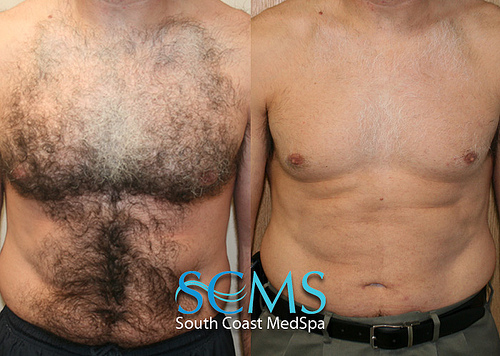
Unwanted hair can be vanished with a variety of hair removal methods. Laser hair removal is a popular method of permanently removing hair in nearly all areas of the face and body, including the upper lip, cheeks, shoulders, chest, back, stomach, arms, hands, legs, bikini line and intimate areas.

With today’s technology, it is possible to treat all hair types, even blonde hair, which has previously been difficult to treat.

It is important to book a laser hair removal consultation; this is when the specialist will be able to answer all your questions.  A consultation is often free and a great opportunity to gather as much information as possible. The price involved is determined by different factors, such as the amount of hair and how many areas are being treated. During this consultation you can get an idea of how much the laser treatments will cost, and also, if there are any financing options available.

There are a few things to keep in mind, and one is not to shave the hair you want gone before your consultation, as the specialist will need to make an assessment of the hair structure, color and density. No tanning of any kind, 2 weeks before and after a treatment is also recommended.

The specialist will apply a thin layer of gel on the skin, and will then move a laser handset over the surface to be treated. A strong light pulse will destroy the follicle without damaging the skin.  The follicle will no longer be able to grow any hair. Some clinics have special “cooling” equipment which will make the treatment nearly pain free. However, at the same time the light pulse goes off, you’ll feel a little sting on your skin. Your eyes are protected by special goggles.

A treatment can take anywhere from 20 minutes to a few hours depending on the size of area to be treated.

Pain is experienced differently, but in general, the treatment is not painful. Those who are especially sensitive will appreciate the cooling process of the skin.

The interval between two treatments is between 4-8 weeks depending on where on the body treatment is performed.

Some medicines, such as antibiotics, should not be taken in connection with treatment as they may cause skin irritation.

The number of treatments needed varies, but between 6-8 treatments is an average number. In some cases when the customer has very blond hair, additional treatments will be necessary.

About ten days after treatment, you will begin to see the hairs falling out. Resting hair follicles are not affected, and a few months later, a new treatment will be needed.

Laser hair removal has been tested over many years and is proven to be completely safe and without side effects. Any redness of the skin will disappear within a few hours.

Though some patience might be required, laser hair removal is a great option for removing unwanted hair, not just temporarily, but for good.

Photo via Southcoastmedspa2010

Post image for The Dangers of Laser Hair Removal

Laser hair removal is becoming a popular procedure for permanent hair removal and body hair sculpting. Many people are inclined to believe that laser hair removal is a nostrum for anyone suffering from unsightly body hair. Unfortunately, it never occurs to such people that laser hair removal specialists are preying on low self esteem and obfuscation of the facts. Any cosmetic dermatologist, or otherwise licensed hair removal specialist, will be open with you about possible adverse side effects.

One of the most common, and immediate, side effects of laser hair removal is irritation of the skin. In most cases, this isn’t a major cause for concern After all, you just zapped hair off of your body with a laser. Some people are more prone to burning and redness than others. If you have sensitive skin, laser hair removal might irritate it. Likewise, people with darker skin absorb more of the laser light, and may be more likely to experience complications with their laser hair removal procedure than their light-skinned counterparts. Your hair removal specialist should be able to hook you up with short term treatment options if this is a concern, such as analgesics or a topical cream of some sort. If the burning or irritation persists, contact a physician.

Laser hair removal may also cause problems involving your body’s supply of melanin. Melanin is the chemical responsible for your skin pigment, and is the reason you get darker in the sun. Sometimes, a laser hair removal procedure can disrupt the normal functioning of melanin in the area subject to the procedure. Sometimes, laser treatment may cause the melanin to overreact. The skin will darken, like a sun tan.

Laser hair removal may also cause the opposite reaction. Sometimes, laser hair removal procedures will interfere with melanin production in the area subject to the hair removal. The pigment will disappear from even the darkest skin, leaving an area of white skin behind. There are unfortunately no ways to permanently correct a loss of pigment, so this leads to a permanent discoloration of the area where the laser hair removal took place. For some, loss of skin pigment can be even more embarrassing than the body hair they tried to remove in the first place.

One of the best ways to avoid complications with your laser hair removal procedure is to make sure you are dealing with a licensed professional. If you are interested in hair removal, ask your physician if he or she can provide you with a referral.

Hair Removal Scams

July 28, 2010

Post image for Hair Removal Scams

In almost any business focusing on exterior beauty and looks, there’s a substantial number of fraudulent and insincere businesses who are looking to rip you off. Hair removal is no exception. Proponents of hair removal scams deceive by manipulating most Americans’ insecurity with their bodies.

Thankfully, there are many ways to avoid being a victim to a hair removal scam. The first thing to look out for is claims about the product’s effectiveness. Any suspicious claims should not be taken on face value. Hair removal, especially permanent hair removal, is seldom a cheap, easy and painless procedure. Remember, you’re fighting biology here. Hair removal scams will compensate for their flimsy premises (and trust me, many of them are quite flimsy) with overstated “testimonials” or offering promises of unrealistic results.

Hair removal ripoffs are often found through television infomercials and the Internet. If you see a hair removal product on a television commercial, check to see if there’s some small print at the bottom of the screen that says “results not typical” or something similar. Legitimate hair removal products will usually mention somewhere in plain print if they have FDA approval. If there’s no mention of the FDA approval, you may be walking into a scam.

The method of hair removal in question also can provide hints as to whether or not you’re dealing with a scam. Anything avoiding x-rays, or radiation of any kind, should be avoided. Most of these hair removal products have been banished from the market, but some may still remain. These are ineffective, and can cause serious long term effects. I don’t know about you, but I’d rather have too much body hair than a giant malignant tumor. Also, although there are some reputable chemical hair removal products (Nair and Veet come to mind), there are plenty that don’t work or may cause chemical burns.

With these products, and hair removal products and procedures in general, research pays off. There are many websites dedicated to hair removal customer reviews, so there’s really no excuse. See what actual users of hair removal products are saying, rather than relying on the false testimonials on the side of the box. If you are considering laser hair removal, or any other procedure that requires meeting with a specialist, this especially applies.

Remember, frauds and con men are concerned with taking your money, not your personal safety. Illegitimate hair removal techniques can lead to permanent injury, so always keep that in mind.

Photo via jepoirrier
 
Copyright © 2012. All Rights Reserved. HairRemoval.org


Terms and Conditions | Privacy Policy