Post image for Does Laser Hair Removal Really Reduce Hair?

Until recent years, laser hair removal often claimed to permanently remove all hair. But consumers were complaining over this fact and studies proved that laser hair removal could not guarantee permanent removal of all hair. The FDA (Food and Drug Administration) stepped in to establish clarity and granted manufacturers permission to claim “permanent reduction”, but not permanent removal.

So now that clarity has been established, can laser hair removal really reduce hair? The answer to this question will depend on who you ask, but the short answer is yes. Laser hair removal can indeed reduce hair, and there have been enough studies to support this fact. While there are definitely those who saw a strong reduction in hair after just a few treatments, not everyone who had laser hair removal would agree, as there are those who had less successful treatments. [click to continue…]

Post image for What Credentials Should a Laser Hair Removal Clinic Have?

Choosing a top notch laser hair removal clinic is one of the most important factors in ensuring successful treatments. But in the process of finding a reputable laser hair removal clinic, many prospective clients are left wondering what credentials or certifications a laser hair removal clinic should have.

This question ultimately becomes a matter of the individual who is going to perform the laser hair removal treatments, and you want to make sure that they are licensed as required by the state, and that they have additional credentials as well. Exactly what is required to perform laser hair removal will vary from state to state. [click to continue…]

Post image for Laser Hair Removal: What Is Hypo and Hyperpigmentation?

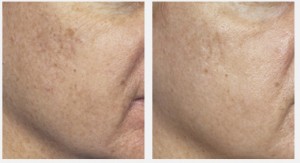
Laser hair removal when done by a skilled, experienced practitioner is a safe and efficient treatment that leaves nothing but slight redness in the treated area. When a practitioner is inexperienced the risk of side effects can be slightly higher. Hypopigmentation and hyperpigmentation are the two names of conditions that can arise after a laser hair removal session. While these conditions are rare, they occur when too much of the laser is absorbed by the skin, rather than the hair. And while the names sound similar these conditions are complete opposites of each other.

The skin has a certain amount of melanin (color) in it. And a decrease in melanin will lead to lighter skin while an increase will lead to darker skin. Hypopigmentation refers to the decrease of melanin while hyperpigmentation refers to the increase of melanin. Both hyperpigmentation and hypopigmentation are believed to be caused by an incorrect laser type or wrong settings according to the client’s skin tone. Even though these two conditions are very rare when it comes to laser hair removal, someone who has them can consult an experienced dermatologist to get help. Time and patience is important when recovering from any of these conditions. [click to continue…]

Post image for Laser Hair Removal vs. Waxing

Laser hair removal and waxing are two of the most common and popular hair removal methods today, and many would like to know the pros and cons of each method. Before the two methods can be compared understanding how each method works is important.

The goal in laser hair removal is to permanently reduce hair. The laser hair removal practitioner uses a laser device over the area to be treated. But not all hairs can be targeted at the same time as hair grows in different stages. Several treatments are needed spaced apart by 4-8 weeks. Almost any area of the face and body can be treated. The treated hairs will shed 10-14 days after treatment where after the client will be smooth for a couple of weeks until another treatment is needed. While laser hair removal is an effective treatment, it is also long term process.

Waxing is an older method of hair removal that dates back many centuries. And it was only a couple of decades ago when women routinely used to make their own wax combining lemon, honey and sugar. With the introduction of ready made wax that only needs to be heated, making your own wax was no longer a must. In order to remove hair the wax needs to be spread over the area to be treated. The wax can thereafter be removed as is or with the help of a piece of thin fabric. A successful waxing will leave the skin smooth and hair free for a couple of weeks.

When it comes to the delicate subject of pain, neither laser hair removal nor waxing is usually 100 percent pain free. Both methods can cause great discomfort, especially in sensitive clients. However, for laser hair removal it is possible to use numbing cream or take painkillers prior to treatment. And during waxing, the first strips are usually the most painful where after the body’s natural painkiller, endorphins, will kick in and ease the pain. Pain is individual but many people who have tried both methods feel that the pain from waxing is more intense.

Laser hair removal does not pull the hair out as waxing does, but the hair will fall out on its own. While laser hair removal costs more than waxing, it also permanently reduces hair, which waxing does not. Waxing is temporary and hairs are expected to grow back. In laser hair removal one can usually notice a strong reduction in hair even after just a couple of sessions.

One of the disadvantages to waxing is that it can be messy and that it requires monthly maintenance; hairs also need to be long enough to be waxed. In laser hair removal, shaving of the hairs is fine and does not interfere with treatment. While both methods have their advantages and disadvantages, laser hair removal is the only one that offers permanent reduction in hair, which makes it a more attractive solution to many people.

Photo via michael cyancy

Post image for Which Laser Hair Removal Device Is Right For Me?

With the abundance of different laser hair removal machines available to the public, it is no wonder that prospective laser hair removal clients wonder which laser type is right for their individual hair and skin type. Though there are several laser devices that can treat the same type of hair and skin, there is certainly a laser type that is better suited for each person.

Before undergoing any type of cosmetic procedure, including laser hair removal, education is important. Someone who is considering laser hair removal will benefit greatly from researching different laser types that are available in clinics, to see which one might be right for them. Understanding the uniqueness of your skin and hair type is essential, as what worked on a friend or relative, who also had laser hair removal, may not work for you.

Since the effectiveness of a laser hair removal device if often based on the skin and hair type of the client, knowing exactly which type you have is important. The Fitzpatrick scale is a useful tool in knowing precisely which type of skin you have. This scale has 6 different levels ranging from very fair and sensitive to the sun, to black and insensitive to the sun. Knowing your exact type of skin will allow you to intelligently discuss your options with the laser hair removal practitioner. For example, you can ask if the laser device that the clinic has is safe and efficient considering your specific hair and skin type.

Finding a laser hair removal clinic that has a laser that can treat your hair and skin is crucial, since a laser that is inefficient on your hair would simply require additional treatments and increase the total cost of treatments. Using the right laser will also minimize any side effects. Laser hair removal devices are very expensive and it might take a while for them to be replaced. This is why some laser hair removal clinics will state that they can work on you without issue, regardless of which machine they have. And this is yet another reason it is important for prospective laser hair removal clients to do their own research and find a clinic that has the laser device that is optimal for them. However, good thing is that most laser hair removal clinics have several laser machines available for use, and there is a high chance that one of them will work on you.

Even though every laser hair removal practitioner has their own recommendations, and the same laser can often treat a variety of hair and skin types simply by adjusting the settings, many lasers are more optimal in treating certain skin types than others. The Nd:YAG lasers are often recommended for individuals with darker skin, the Alexandrite lasers can treat those with fair skin and the Diode lasers can treat lighter skin types as well as tanned skin.

Post image for How a Laser Hair Removal Treatment Is Performed

While every clinic that offers laser hair removal treatments has their own specific procedures, there is a general idea of how a laser hair removal treatment is performed. And even though the exact methodology of how a laser hair removal treatment should be performed will vary greatly among practitioners, there are several steps of the process that are very similar.

A laser hair removal treatment is performed as an in office procedure at a physician’s clinic or at a laser hair removal facility. No anesthesia is used and the client is expected to return to his or her normal activities after the procedure. The practitioner will have a set of pre treatment instructions for the client to follow, and these guidelines may include no plucking or waxing before the treatment, as well as no tanning. Extra attention should be given to whether the practitioner wants the client to shave the area to be treated or not. Some practitioners allow the client to shave the area as desired, while others will want to see exactly where the hair grows before they shave it off themselves. The practitioner will also have a set of after treatment instructions to follow, which are similar to the pre treatment instructions.

Even though anesthesia is not used to perform a laser hair removal treatment, those clients that are concerned about potential pain do have a few options. It is possible to desensitize the skin with the help of a topical numbing cream, which would need to be applied approximately 30 minutes prior to treatment. Clients can also take a painkiller prior to a treatment, in order to minimize discomfort.

Depending on the area to be treated, the client might be asked to remove some of his or her clothing and lie down on a treatment table. Both the client and the practitioner will wear safety goggles to protect the eyes from the laser beams. Even though newer laser hair removal machines come with a built-in cooling system, many practitioners will apply a cooling gel to the area right before the treatment starts, in order to minimize discomfort.

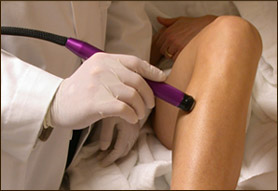
The practitioner will grab the laser hair removal device and hold it against the skin for about one second to allow the laser beams to be released over the area. At this point the client might feel a small, but tolerable amount of pain. The sensation can be described as something snapping against the skin. The practitioner will quickly move the device over the skin until the whole area has been treated.

The exact length of the treatment depends on the size of the area being treated, but given that laser hair removal is a fast and efficient treatment the entire procedure will be over sooner than one would think. Any side effects other than slight skin irritation and redness are rare and the client can immediately resume his or her daily activities following the procedure.

Photo via Vancouver Laser & Skincare Centre

Post image for Why Laser Hair Removal Treatments Are Spaced Apart

While some prospective laser hair removal clients might visualize coming in for back to back sessions to remove all hair quickly, this is not possible. One of the first things that clients realize is that laser hair removal is a long term process which cannot be completed in a short period of time.

After a laser hair removal consultation, clients come to understanding that in addition to being a long term process, laser hair removal requires a series of treatments that are spaced apart. The specific reason why laser hair removal sessions are spaced apart is because only a certain percentage of the hair is active at any time, and this is the only time laser hair removal is efficient. When the current active hairs have been treated, enough time must be given to allow the other hairs to appear. It takes several weeks for a hair to be produced again. If laser hair removal sessions are scheduled too close together, the hair that is meant to be targeted may not be ready and the session would not be efficient.

Even though the exact number of weeks recommended between laser hair removal sessions will depend on who you ask, it is not uncommon for it to be 6-8 weeks. Some will recommend 4 weeks while others will recommend as long as 10 weeks in order for the hair to be completely grown. However, the average number of weeks recommended between laser hair removal sessions is about 6. And with 6 sessions spaced by 6 weeks means sessions will be needed over an 8 month period, or longer, depending on how successful treatments are. It is not uncommon for a laser hair removal plan to stretch over one year.

How far apart laser hair removal sessions are spaced out will also depend on the body area treated, as hair growth will occur at different speeds on different parts of the body. Some areas will need more time, while other areas can be treated more frequently. For instance, some experts recommend that the face is treated every 4 to 6 weeks, the underarms and bikini every 5 to 6 weeks, and the back every 8 to 12 weeks.

Spacing the laser hair removal sessions appropriately is important in order to ensure that the treatments are as efficient as possible. Any clinic that offers hair removal sessions closer than 4 weeks apart should be approached with caution. It is considered unethical to treat someone while it is not efficient. Some clinics might offer sessions close together solely for their own financial gain. With the abundance of clinics who offer laser hair removal it shouldn’t be hard to find a clinic who works according to the most efficient and ethical guidelines.

Photo via Mrs Brownhorse
Post image for Laser Hair Removal: Thinning Out the Hair

While laser hair removal might often be associated with removing all the hair in one area, this is not the only way in which it can be used. Some women and especially men don’t look for complete removal of the hair, but are more interested in thinning it out, meaning reducing some of it but definitely not all. Many men don’t want complete removal of hair, because a certain degree of hair is considered masculine, however, they would like to have a little less hair instead.

Thinning out the hair instead of removing it is becoming a more common request, especially for men, and the chest, upper arms and back is some of the more common areas. Laser hair removal to thin out the hair will probably need fewer treatments than regular laser treatments who aim to remove all hair. And waiting for results may not take as long, as thinning of the hair can sometimes be observed as early as after the first treatment.

Those who wish to only to thin out the hair and are concerned with whether all hair will be gone in one session need not worry. Laser hair removal is a long term process and is not completely permanent, but offers a long term reduction in hair. The hair growth cycle has three different stages where only hair in the active phase can be targeted. This means that at any given time only a certain percentage of the hair can be treated with the laser. Approximately 80 to 90% of the hair is in the active phase, which means a small amount of hair will be completely unaffected by the laser. Even hair that has been affected by the laser is expected to grow back at some point, even though the hairs that do grow back are often thinner and lighter.

Overall, it is fully possible to reduce and weaken hair in any area while still leaving a certain amount. Laser hair removal is a flexible treatment and can be customized according to the specific needs of the client. The laser hair removal practitioner can adjust settings or choose a different laser type depending on exactly how much hair the client wishes to reduce. But simply having less treatments can sometimes be enough for overall hair reduction.

Laser hair removal is an excellent method for thinning out and reducing the density and texture of the hair, as this task can be too difficult to accomplish with any other hair removal method. And while it is certainly possible to thin out the hair by laser hair removal, it is important to find a practitioner who has experience with this type of request, and who understand you well. During the consultation, you would need to emphasize that you want the hair thinned out, not completely removed, in order to ensure satisfactory results.

Photo via concert tickets
Post image for Laser Hair Removal – Can Red Hair Be Treated?

While laser hair removal traditionally has been the most effective on those with dark hair and fair skin, the advancement of laser technology has made it possible for others to be treated as well. Those who previously were not considered good candidates for laser hair removal, including those with dark or tanned skin and other shades of hair color, can now efficiently be treated. But whether those with red hair can also be successfully treated or not remains a complex topic with little information and no clear answer.

To understand why laser hair removal may not be efficient on red hair, one needs to understand how the laser works. The laser is attracted to the amount of color, or melanin, in the hair. And dark hair has the most melanin in it, while red hair does not have as much melanin. When the hair follicle is dark, the laser can easily detect and destroy it, but because of the lack of melanin, red hair is not as easily detectable. This is why red hair becomes more difficult to treat. While dark hair might be the easiest to treat by laser hair removal, light hair is the most difficult and red hair probably lies somewhere in the middle.

The exact shade and coarseness of the hair will also play a role. While lighter shades of red hair often will not be responsive to the laser, all red hair is not the same. Someone with coarse, darker red hair might have better luck with laser hair removal treatments than someone with very fine, light colored red hair.

Many laser hair removal specialists will firmly state that laser hair removal is not effective on red hair, while others might be open to treating it. With red hair, it is hard to say exactly how the hairs will respond to the laser treatment. It is likely that the laser will not have any affect on the red hair, or if the hair is dark and coarse enough, it might.

The biggest concern with treating red hair is how efficient the treatment will be. Someone with an acceptable shade of red hair might need more treatments than the average client, or might need to be ok with a smaller percentage of hair reduction, for example, a 40% reduction rather than an 80% reduction. The experience of the laser hair removal practitioner as well as how new the laser device is might also play a role in the ability to treat red hair.

If you have red hair in a darker shade there is a small chance that laser hair removal will work for you. However, the laser hair removal practitioner will want to see your hair before determining whether it can be treated or not. A free consultation is offered by many laser hair removal clinics and is a great way to find out whether the red hair in question can be treated or not.

Photo via firaatje

Post image for Laser Hair Removal – How to Make the Most of Your Consultation

Scheduling a laser hair removal consultation is the first step before choosing to undergo laser hair removal. A laser hair removal consultation is often free of charge and is a great way to learn more about the entire process. The practitioner will explain how laser hair removal works and how the unwanted hair will be targeted with laser. The practitioner will also customize a treatment plan according to your specific skin and hair type, and will also want to know if you have any medical conditions or if you are taking any medications. Additional factors such as ingrown hairs or tattoos should also be discussed.

While the practitioner will ask questions and gather as much information as possible to customize your plan, it is important that you ask a fair amount of questions as well. Ask if the laser hair removal device that the practitioner is planning to use can safely and effectively treat your hair. Feel free to ask what the specific name of the laser machine is, this way you can look it up and do research on it. Also find out what kind of results can be expected in your specific case, how many treatments you will need, and what your total cost is estimated to be.

The laser hair removal consultation is also where the practitioner can do a test patch on your skin. This means a small part of your face and body can be treated by the laser in order to see how the skin will react. And if you are concerned about any potential pain or discomfort, the consultation is a great time to bring that up so that the practitioner can address your concerns. He or she will be able to take steps to make sure the treatment is as comfortable as possible.

During the consultation be sure to know what the recommended pre and post treatment instructions are, and ask the practitioner if there is an information sheet you can take with you. Most practitioners have specific recommendations that they want you to follow. Be sure to know what you are expected to do before and after each treatment, as well as in between sessions.

To get the most out of your consultation appointment, being prepared is key, so be sure to research laser hair removal beforehand. By learning as much as you can about laser hair removal before the consultation, you will know what to ask. After the consultation, you should have a good understanding of what laser hair removal is, how it can work for you and what to expect during and after the laser treatments. And if not, don’t hesitate to ask the practitioner additional questions. The goal with a laser hair removal consultation is to have all your questions answered and make sure you are comfortable with the entire process, should you decide to proceed with treatments.

Photo via SouthBeachSpa

 
Copyright © 2012. All Rights Reserved. HairRemoval.org


Terms and Conditions | Privacy Policy