Kathy Bromley has been operating her self-titled electrolysis clinic in Agoura Hills, California for more than 20 years. She treats both men and women and worked on everything from faces to legs to backs. I asked Kathy about what makes electrolysis an effective and viable hair removal solution.
What makes electrolysis better than other hair removal options?
Electrolysis has been around since 1875. It has and still is considered the ONLY permanent hair removal method. Laser is still considered Permanent hair REDUCTION by the FDA. All other methods i.e. waxing, shaving, threading are temporary fixes.
On which areas of the body do you get the best results?
The areas best served by Electrolysis are [click to continue…]
 Laser hair removal is generally a safe and efficient way of removing hair on most parts of the face and body. In the hands of an experienced practitioner, clients rarely have anything to worry about, and side effects other than slight irritation are rare. However, there is one thing that sometimes causes concern to prospective clients: being exposed to the sun. This is because in laser hair removal, the general advice is to not expose the area that needs to be treated to the sun, 2 weeks before and 2 weeks after treatment. But since many clients live in year around sunny weather, or like to tan or go on vacations, the question on if and how long the sun needs to be avoided becomes a more serious question.
To understand how the sun can affect an area that is about to undergo laser hair removal, or that has just received it, the way laser hair removal works must be understood. A laser hair removal machine has a handheld device which contains a laser that produces a high amount of heat. The heat is needed in order to burn and destroy the hair follicles at the root. At the same time this heat can also cause a mild burn to the skin, especially for those with sensitive skin. This burn can lead to skin irritation and anything that can aggravate this irritation must be avoided. The sun can easily burn the skin and exposing an area prior or after laser treatment to the sun is just not a good idea. This could result in a more severe burn that can cause pain and discomfort and will take longer time to heal. [click to continue…]
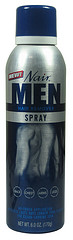 Hair removal sprays can be found in most major convenience stores, and come under several different brands. In addition, these hair removal sprays also comes in different scents, kiwi is one example, and sometimes has other benefits as well, such as moisturizing or exfoliating. Considering that hair removal sprays do not cause pain or discomfort in any way, they are a good alternative to those who fear the pain that comes with waxing and laser treatments. Sprays are so comfortable and easy to use that many people want to know if they actually work.
Hair removal sprays are considered depilatories, which contain ingredients that will break the bonds of hair. The bonds are what hold up the hairs, so when the bonds are broken down, the hairs will become loose and can easily be wiped away, which means that hair removal sprays most definitely work. Hair removal lotions and creams carry the same concept, and all can be used by both women and men. In fact, there are even sprays designed for men. Most of these products will remove hair fast and easy, however, if there is a lot of hair or if the hair is thick, the product might need to be left in a little longer, or several applications can be needed. [click to continue…]
Keratosis Pilaris, often called chicken skin or goose bump skin, is a very common skin condition that causes tiny bumps and rough patches on various parts of the body, but usually on the upper arms or on the thighs and buttocks. Keratosis Pilaris is believed to be caused by a protein called keratin which forms hard plugs in the hair follicles. There are different types of this condition, and while some can cause discomfort or itch, most do not cause anything at all and the condition itself is completely harmless. Still, many people who have keratosis Pilaris are unhappy with their skins appearance and are looking for ways to improve the texture. Laser hair removal is believed by some to treat this condition.
Exfoliating the skin, taking vitamins, making dietary changes as well as using a variety of lotions and creams, and undergoing microdermabrasion can all be helpful in treating keratosis pilaris, but this condition is usually very hard to get rid of. However, in recent times laser hair removal has given hope to those who are unhappy with having keratosis pilaris. While this treatment cannot eliminate all the keratosis pilaris in one treatment, many people have reported that laser hair removal has improved the bumpiness of the skin. [click to continue…]
Excessive hair on the face can be an unpleasant condition, mostly to women but also to men. Unwanted hair on the facial areas are common on the chin, upper lip, cheeks, side burns and eyebrows. While there are several ways to remove the hair on the face, caution is needed, because the skin on the face can be sensitive and reactive. No matter what area of the face is considered for hair removal, it is always good to test a small area first, in order to see if there will be some sort of reaction. In fact, skin reactions on the face as a result of hair removal are not unusual, with redness and irritation being the most common.
While there are plenty of men who shave their faces frequently, shaving is not recommended when it comes to removing facial hair on a woman. This is mostly due to the widespread belief that shaving will make the hairs feel thicker and sharper, and that is definitely not desirable when it comes to the face. Waxing is a better method for removing hair on the face, but is painful and can easily lead to irritation, redness and pimples. On the other side, the skin will feel smooth after waxing and this feeling will remain for a couple of weeks. Plucking of facial hairs is often experienced as very time consuming and threading can be quite painful, and is easier to have done by someone else. [click to continue…]
Laser hair removal is proven to work on dark hair, but individuals with blond hair may not have as much luck, in fact, most practitioners will not treat blond hair, simply because it is considered inefficient. In addition to not being efficient on blond hair, laser hair removal also may not lead to great results in slightly darker hair tones, such as light brown hair. Knowing how the technology works will help you to understand why it probably will not yield good results on lighter hair colors and especially blond hair.
In order to understand why laser hair removal won’t work on blond hair, one would simply need to understand how laser technology works. The laser device is attracted to color, sometimes also referred to as pigment or melanin. The laser “recognizes” the color in the darker hair and can target it. The darker hair will absorb the heat from the laser and become destroyed or damaged. The majority of laser hair removal devices are designed to operate in this way. Dark hair has plenty of color in it, that is why laser hair removal is efficient on darker hair. However, blond hair does not have enough pigment in it. The laser simply does not “see” the blond hair and the treatment becomes completely useless. [click to continue…]
The question on who can perform laser hair removal has been highly discussed in recent years, especially as the popularity of this technology has increased. In addition to seeking out a trained and knowledgeable laser professional, most prospective clients also want to know that they are being treated by someone who is allowed to perform the treatment. At first glance, there appears to be plenty of confusion and little clear information on this topic, but with deeper research the answer becomes clearer.
When wanting to know who can perform laser hair removal, it is important to keep in mind that there is no rule that applies everywhere, but it all has to do with the regulations of each state. The very first thing to do is to check with the state medical board where one lives, this board will be able to say who can and cannot perform the treatment. Each and every state has different requirements that are in place to regulate the use of laser hair removal machines. [click to continue…]
We all want to get rid of our unwanted hair, but not necessarily at the cost of intolerable pain. While some people will definitely take any pain to get the smooth skin that they are looking for, far from everyone is willing to undergo such unpleasantness. Luckily, there are several forms of hair removal that are likely to cause little to no discomfort. While the most and least painful methods of hair removal might also depends on who you ask, there are a few facts that many people would agree on.
Waxing is described by many people as the most painful thing they have ever experienced. It is right in the moment where the wax is being ripped from the skin that hurts the most, in fact, this pain is often described as excruciating. However, the pain will usually subside after the first couple of strips, because that is when the body’s own painkillers, endorphins, kick in. Other than taking a painkiller prior to treatment, there isn’t much else one can do to ease the pain of waxing. But waxing is still a popular form of hair removal, because it leaves the skin smooth for several weeks. [click to continue…]
Individuals with red, blonde and white hair, who have been told that laser hair removal will not work on them, may also have been told that electrolysis could be their only option when it comes to permanent hair removal. But those with lighter hair colors are not the only ones that can undergo electrolysis; in fact, electrolysis can be performed on nearly anyone and has a reputation for being permanent. But whether electrolysis is really permanent or not has been a hot topic for many years in the industry, and while some people might be skeptic, it is the only treatment that has been recognized by the FDA (Food and Drug Administration) as permanent.
Electrolysis is a hair removal method in which a fine needle shaped metal probe is inserted into the hair follicle. This probe carries an electric current, which destroys the hair follicle at the root. Just like in laser hair removal, several sessions will be needed to treat all hairs, since hair grows in three different stages. Electrolysis is different from lasers because it does not seek out the pigment, or color, of the hair, but rather attacks the hair follicle itself. This means that the color of the hair is irrelevant, and electrolysis can efficiently treat any hair color. [click to continue…]
There has been some discussion in recent years, mostly on forums, on whether laser hair removal causes more hair growth, but the general answer to that question is no. This method does not make the hairs grow, but instead reduces the amount of hair that is growing. However, there is a small amount of people who swear that hair started growing, in areas where there previously had been none, after they had received laser hair removal. While this type of occurrence is rare and has not been scientifically proven, it is not an impossibility that a laser somehow would be able to reinvigorate hairs and make them grow.
Normally, laser hair removal will definitely help to reduce hair in any area of the face or body, because the heat from the laserdevice is so strong that it severely and permanently damages the hair follicles. However, there is something called vellus hair, or peach fuzz hair, which is very fine hair that can appear anywhere on the skin, and this hair can be difficult to treat. For reasons that the experts are still not completely sure of, the laser can have a hard time in treating and eliminating these hairs. In addition to the vellus hairs, single sparse hairs can also react similarly. [click to continue…]